


Want to bookmark your favourite articles and stories to read or reference later? Start your Independent Membership today.
Already a member?
Log in
Donald Trump went on a largely aimless rant to a group of Navy midshipmen and a handful of members of the armed forcesâ top brass on Tuesday as he announced the construction of a new submarine shipyard in Baltimore, Maryland.
The president spoke in front of a combat vessel at Sparrows Point, Maryland, where he announced that defense contractor Anduril would build the facility to support the construction of the Navyâs new autonomous submarine craft. But the point of his visit was once again obscured by an unfocused diatribe about the war in Iran, the U.S. strike on Venezuela, and the tariff policies his administration has used to reshape global trade frameworks.
Trump repeated a refrain about tariffs becoming his âfifthâ favorite word, after others such as âwifeâ and âGodâ, to a mostly silent batch of bored Navy undergrads who came up from the Naval Academy in Annapolis to stand and hear the president talk. The president claimed that tariff was actually his favorite word, but under pressure from his critics, he lowered its importance.
âWe’re building more car plants than we ever have in history,â the president told his audience. âIt’s all because of my favorite word, my fourth favorite, maybe my fifth– tariff. Without tariffs, we wouldn’t be doing that.â
âThe word tariff for us has made us a rich country again, and rich in a lot of ways,â Trump added.
Anduril is partnering with the Navy on the project, which will see a $3.7bn, 2 million square foot facility built at Sparrows Point, just steps away from the site of the destroyed Francis Scott Key Bridge that once crossed Baltimoreâs Patapsco River. Construction of a new bridge is set to be finished in late 2030. Anduril promises that the new shipyard will be home to approximately 3,100 new jobs.
Absent from Tuesdayâs announcement ceremony were Baltimore city officials and the stateâs governor, Wes Moore. A Democrat, Moore said through a spokesperson on Tuesday that the White House initially invited him to speak at the event, then moved him to a non-speaking role at Trumpâs intervention. The White House denied this, claiming that Moore was only invited as a guest to the ceremony.
Typically, the announcement ceremony for such a facilityâs groundbreaking would include statements from at least a few local officials. That didnât take place on Tuesday for one reason: Trumpâs political opposition to Moore and city leadership in Baltimore, who are all Democrats and were denied the spotlight on Tuesday. The president was joined by Iowaâs Republican governor one month ago when he announced the development of a new steel plant in Lee County.
White House officials have Trump on the campaign trail stumping for Republicans across the country in October, with the midterm elections now just a month away. The presidentâs party is in dire polling straits, with the Cook Political Report announcing Tuesday that it was moving Senate races in favor of the Democrats once again, declaring Texas a likely flip and Kansas a toss-up. Driven by Trumpâs own polling and woeful economic conditions spurred by the war in Iran and conflict in the Hormuz Strait, Republican popularity is at an all-time low at a moment when the party is trying to defend majorities in both the House and Senate.
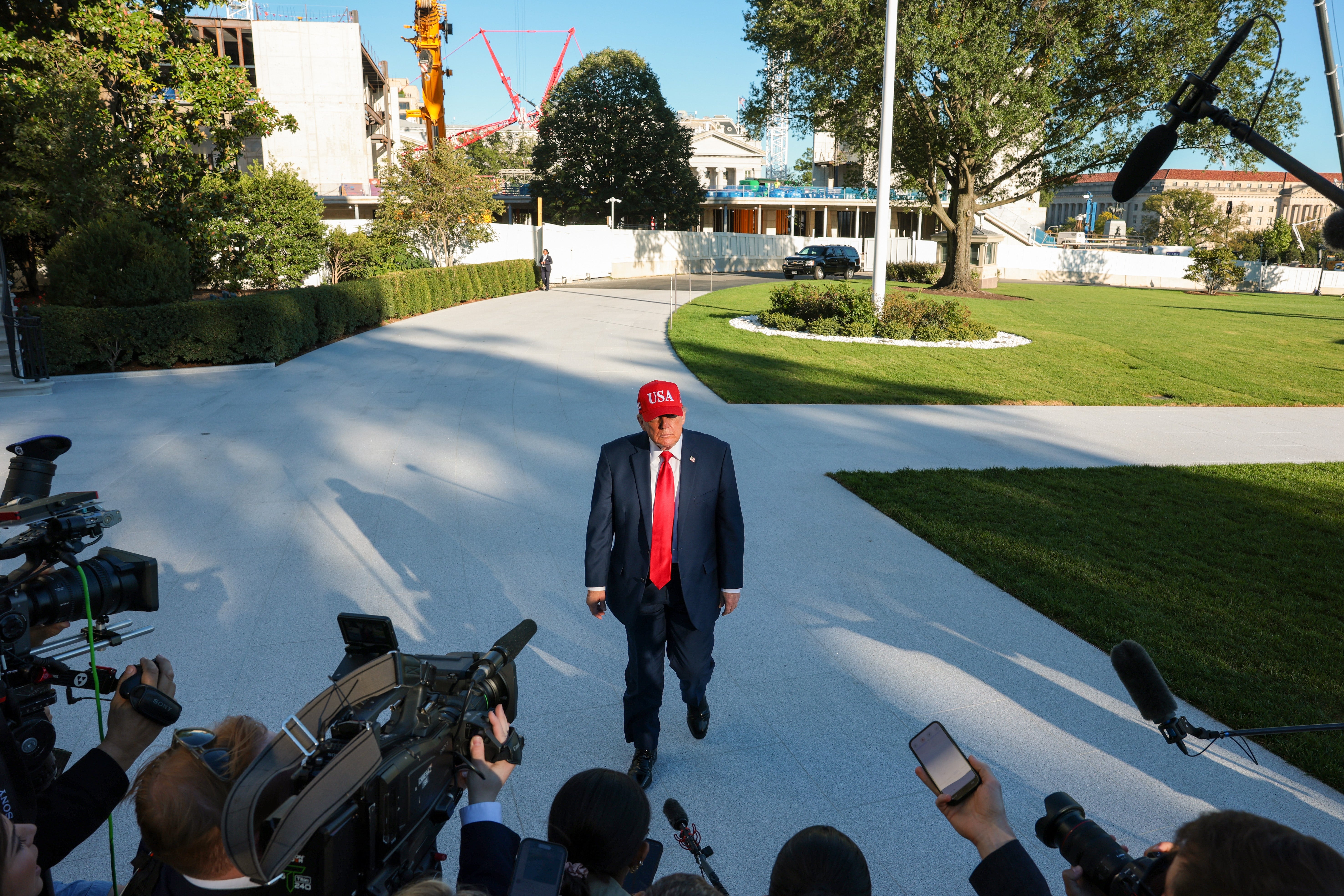
As part of that push, Trump is hard at work selling the core of his economic agenda, which was carried out through his tariff policies at the executive level after slim GOP congressional majorities proved unable to pass most policy legislation. The Trump administration levied so-called âreciprocalâ tariffs on dozens of countries, aimed at forcing companies involved in the U.S. market to reshore manufacturing or risk steeper penalties.
U.S. manufacturing has grown under Trumpâs second term as a result. The growth, though, has been overshadowed in many Americansâ eyes by spikes in gas and food prices alongside the general chaotic nature of the Trump presidency, which has slashed tens of thousands of federal jobs and pursued an erratic foreign policy that has angered close U.S. trading partners and geopolitical allies.
With just weeks to go until the midterm elections, gas and diesel prices remain at their highest points since the Covid-era supply squeezes pushed prices to extreme levels. Other areas of the U.S. economy continue to see persistent inflation as well, which many economists have linked to the tariff agenda pursued by Trump since he returned to office.
Trump has tried to reassure Americans of the economyâs strength as the home stretch of the midterm campaign season nears, and has faulted the media for not painting a rosier picture of votersâ feelings about their financial futures.