


Main points
- Employees are seeking a new public sector deal, with trade unions arguing that pay terms must be agreed â before other issues are addressed
- Hundreds of striking health workers are out at University Hospital Galway and the Mater hospital
- Most colleges, schools and universities are closed
- About 200 Dublin City Council workers have gathered outside Civic offices
- Thousands of medical appointments have been cancelled but emergency departments remain open as do GPs and pharmacists
- Court services have been curtailed, Leinster House is closed and many local authority services have been disrupted
- Sinn Féin leader Mary Lou McDonald claimed the Government has âplayed a really disrespectful game of chicken with 300,000 workersâ
- Another work stoppage is planned for Wednesday 21st
Key Reads
- Q&A: What services will be affected by the public sector strike and what will be closed?
- John McManus: Why we must have this performative strike by public sector workers
- Podcast: What is the strike about and why it hasnât been averted?
Strike action held at universities across Ireland
IFUT, the only dedicated trade union and professional association in Ireland for third level academic and research staff, posted photos and videos from picket lines outside universities and third level institutions across Ireland on X.
They shared photos from Dublin City University, University of Galway, Maynooth University, Trinity College Dublin, University College Cork and others.
âNobody can survive on the wages weâre gettingâ
Mark Prouse, head groundsman at the Iveagh Gardens in Dublin, described the provision of â¬1.2 billion for public sector pay in the budget as âan insult,â reports Ãrla Ryan.
âMicheál Martin comes along and brags about this â¬1.2 billion that heâs giving us over the next three years – when you break it down, itâs actually only â¬3.50, â¬3.40, a day or something. Itâs crazy. You couldnât get a cup of coffee with what heâs offering us, so itâs not a genuine offer. He thinks weâre all stupid when weâre not,â Prouse said.
âWhen you mention those types of figures, people automatically think, âOh my God, these guys are going to get a massive money.â But when you break it down between 300,000 people over a couple of years, itâs actually nothing. Itâs only pennies that theyâre offering us.â
Prouse, who is also a Siptu shop steward, said todayâs strike could have been averted if the Government engaged in negotiations with trade unions months ago.
âIt got to this point because the Government wouldnât sit down and talk to us … We should have sat down in January because our last [pay] agreement ended in June, so we should have been sitting around the table last January to discuss the new agreement for the next three years, and they didnât. And here we are in October and they still havenât sat down.â
Prouse, who was striking outside St Stephenâs Green in Dublin, said workers are really struggling amid the cost-of-living crisis.
âMy gas bill has doubled, my electricity bill has doubled, my diesel has doubled. I mean, what do they expect us to live on? … Nobody can survive on the wages weâre getting.â
Prouse thinks the dispute can be resolved in the coming days – in order to avoid another 24-hour strike next Wednesday – if the Government âstop insulting us, sit down and give us a proper [offer]â.
âThey give themselves these big wage rises. You donât see us complaining about how much theyâre giving themselves … Weâre not asking for the money that theyâre giving themselves every week. Weâre just looking for a bit of respect…
âItâs always the unions, itâs always the working class, that have to go to them with our hand out begging, and weâre weâre tired of it.â
The Iveagh Gardens and St Stephenâs Green are among the many parks closed today due to the strike.
Mary Lou McDonald calls on Government to act
Sinn Féin leader Mary Lou McDonald claimed the Government has âplayed a really terrible and disrespectful game of chicken with 300,000 workers that we all rely on,â reports Political Correspondent Cormac McQuinn.
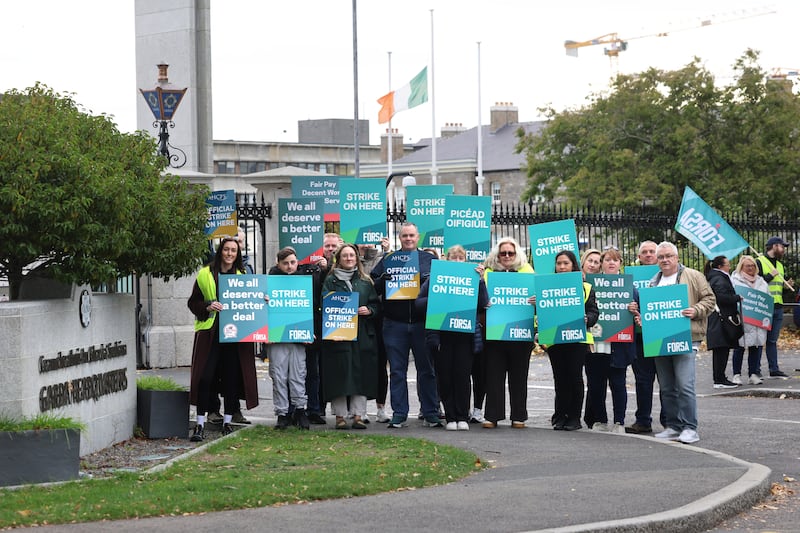
She made the remarks outside the gates of Leinster House where there was around 150 workers from the Houses of the Oireachtas, the National Museum and the National Library on picket lines.
McDonald argued that the industrial action is âa reflection of the failure of Government.â
She added: âIt beggars belief that they have known now for months that they needed to engage and negotiate a new pay agreement and they have failed to do that.â
The Dublin Central TD said there is a âreally strong sense of public support for all of the workersâ and âthese are pay negotiations that need to happen.â
She continued: âThe very idea that the Government is playing a game of semantics or a game of chicken or brinksmanship with workers and refusing to acknowledge that pay will in fact be the core item and the first item for discussion is absolutely incomprehensible to me.
âSo we are calling on the Government to act. I think at this stage the Taoiseach needs to intervene. The phone needs to be lifted.â
She said there must be âclarityâ given to workers that âthey have been heard, that the cost-of-living crisis that they face is real, that their need for a pay settlement is honourable and deserved and that the talks will happen with pay at their coreâ and as âthe first item for discussionâ.
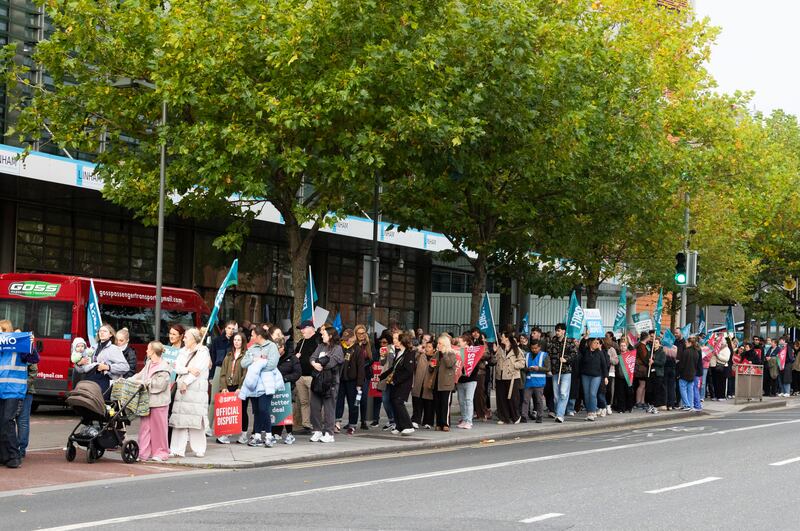
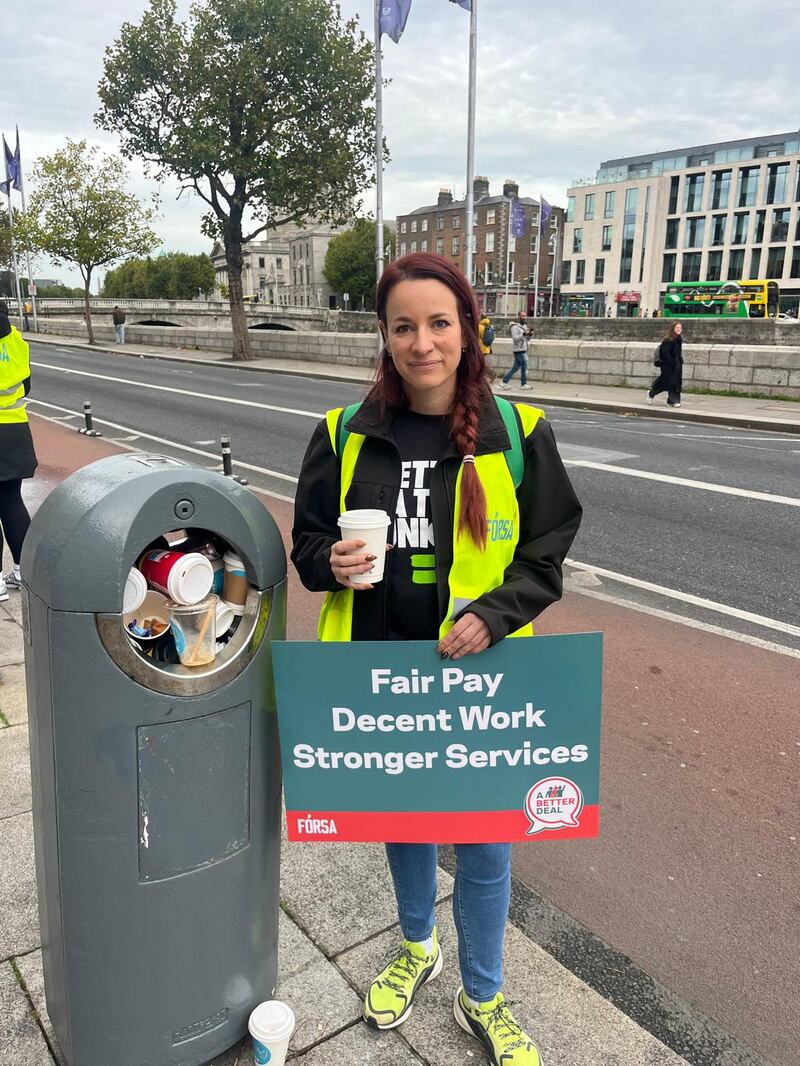
Some photographs from across the picket lines

Photograph: Alan Betson / The Irish Times

Photograph: Dara Mac Dónaill / The Irish Times
âInflation is rising, so should our wagesâ
âThe bottom line is pay,â said Emma Tyrrell, a District Court clerk on the picket line at the Courts of Criminal Justice, reports Legal Affairs Correspondent Mary Carolan.
âThe cost of living is rising and our wages are not. Iâm just back from maternity leave, Iâve two young kids, Iâve a mortgage to pay. Iâve childcare costs, petrol, all them things. Inflation is rising, so should our wages.â
Pay, housing and the cost of living are huge concerns for Ian Temple, who was recently promoted to the rank of executive officer, having been a clerical officer for four years. He works in the Phoenix House courts complex.
Housing and energy costs are up ten per cent, transport 7.5 per cent and it is to go up again, diesel is up 22 per cent, home heating oil is up 60 per cent, said Temple as he stood on the picket line. âI think itâs very disingenuous to say to people with a straight face that things are okay. Come out to the north inner city.â
He and his wife are renting in a rent pressure zone, paying â¬1,500 monthly. âThatâs 50 per cent of my wages gone, thereâs no chance of any mortgage because of the systemic rules laid down after the banking crisis 20 years ago.â
Housing costs are a huge burden for him and many others, he says. âThatâs where all my money is going, itâs also going to Electric Ireland. And thereâs no grants for renters, thereâs more than half a million of us.â
âI absolutely love helping people every day, I deal with claims in the accountantsâ office, every day I answer that call and help people I know Iâm helping citizens. I ask citizens today to support us to get that extra bit of money. Weâre looking for what we deserve.â
Ciarán Lyons, an executive officer in the Phoenix House courts complex, said, because of the housing crisis, he, at the age of 38, is living at home with his parents.
His pay is around the level of the medium industrial wage, meaning buying or renting a house would be very difficult, said Lyons.
âThe pay deal for the public service expired at the start of June and the government had not meaningfully engaged with the union leadership for us and the other unions involved since then,â said Lyons.
Pay should be the first item discussed and agreed on the agenda which it has not been in the last two pay deals, he said.
âEven including the one per cent from the last pay deal, workers are worse off than we were at the same time in 2023.â
Lyons, a Forsa local workplace representative, said clerical officers had approached him coming up to the strike saying their pay is so low they could not afford to lose a dayâs pay.
âOne of the most common queries Iâve had is clerical officers saying we want this better deal, we want to be out with our colleagues but they are scared and anxious of even losing a dayâs pay.â
Emma Courtney and Gillian Teehan, both members of the Association of Higher Civil Public Servants, said they were on the picket line at the Four Courts primarily in solidarity with colleagues on lower grades struggling with housing and cost of living issues.
âI was an EO [executive officer] and a CO [clerical officer] and I know how tough it is for them, and the nurses, the guards, the younger peopleâ said Courtney. âWeâd love a few more quid but if it came to the lower paid workers, getting it, thatâs fine.â
âTwenty, thirty years ago, you wouldnât have younger people living at home with their parents, they would have left, but they have no choice now,â she added.
âThere is an inequity in the system,â said Teehan, citing teachers on lower pay grades as an example.
Protest is not just about pay, say community nurses

Community nurses protest outside the Summerhill primary care centre in Dublin 1 on Wednesday morning, reports Health Correspondent Shauna Bowers.
The nurses said they provide a cradle to the grave service, often visiting patients in their homes, while using their own cars.
Anita Ennis said the protest is not just about pay, but also the impact the cost of living crisis is having on staff.
Health workers âfeel like we have no choiceâ but to strike

Andrea Kelleher, a member of trade union Fórsa who works in BreastCheck Western Unit to the rear of University Hospital Galway campus, said health workers âfeel like we have no choiceâ but to strike, reports Dara Bradley.
âWith the cost of living, we are all just struggling to manage on a day-to-day basis. We need hope that we are going to get some pay increases.
âOver 5,000 people have joined Fórsa in the last few days. The next scheduled strike is the 21st of this month. We all hope we wonât have to stand out here again but if we have to we will,â said Kelleher.
âNobody wants to be on strike,â say Garda civilian staff

More than 150 staff are gathered in strike outside Garda Headquarters in the Phoenix Park on Wednesday morning, reports Hugh Dooley.
âNobody wants to be on strike. Nobody wants to lose a dayâs pay. We just want proper negotiations to start,â Garda control room operator Sinéad Mason (33) told The Irish Times.
âWeâre all struggling. The cost of living is rising drastically. Itâs very simple.â
Mason is joined on the picket by her daughter Megan (12) and her one-year old Maltese-Shih Tzu Felix – the cost of food for dogs and teenagers is rising too, she said.
âI didnât think we would get to this point, but here we all are,â Mason said, gesturing at the assembled protesters buoyed by a passing car blaring its horn to the crowd.
âCivil and public sector workers keep the country going. I myself work in the control room answering emergency calls from the public day in, day out.â
Much like doctors, nurses, midwives and the uniformed gardaÃ, Mason said the staff assembled with their placards are âessentialâ and âshould be protectedâ from the rising pressures of the cost of living.
The sight of protesters outside Garda HQ is not new, but as civilian staff strike, the frontline gardaà are legally compelled to continue working.
Both Garda unions have come out in support of the strike, and that solidarity manifested in Garda members activating their sirens momentarily while leaving HQ.
Government to do âeverything we possibly canâ for agreement

The Government will do âeverything we possibly canâ to reach agreement with public sector unions, the Taoiseach has said.
Micheál Martin said Public Expenditure Minister Jack Chambers and his officials are âworking very hardâ to enter dialogue and negotiations.
He said: âI think we can move this into a better space in terms of getting a resolution to all of the outstanding issues.
âI understand fully the pressures public servants are on and workers are on so our focus is on trying to get a process going that can lead to a satisfactory outcome in terms of a new national pay agreement, which is what we want to put in place.â
Martin said budgetary decisions provided âa very strong foundation and platformâ for public service pay talks, adding that he detects âgood will all roundâ.
Speaking at the Governmentâs AI summit, he said: âI think the foundations are there for a very substantive engagement between unions and government, and we certainly will be doing everything we possibly can.â – PA
Taoiseach open to idea of âhonest brokerâ
Taoiseach Micheál Martin has said he is open to the idea of an âhonest brokerâ to resolve the public sector pay strikes, reports Ronan McGreevy.
The suggestion was made by Forsá general secretary Kevin Callinan on RTà Radio 1âs Morning Ireland programme.
Martin responded that the Government âis open to negotiation, we want dialogue.â
He said he detected a âspirit of goodwill all roundâ to get the public pay issues resolved.
âI know the Minister for Public Expenditure Jack Chambers is working hard on this and his officials in the department are well-practiced in relation to public service pay negotiations,â he said
Martin said he noted a change of tone among trade union leaders towards further engagement and a process that could lead to a resolution.
âWith goodwill on all sides, I think we can move into a better space in terms of getting a resolution to this dispute,â he told reporters at an AI summit in the RDS.
When asked if he thought a second day of strikes could be avoided, he responded: âI would hope so. Thatâs a matter for the trade union movement. We will spare no effort to get talks going. We will continue to try and open a process of dialogue.â
âI would like to think that without overstating it. I understand fully the pressures public servants are on and workers are on.
âOur focus is on trying to get a process going that could lead to a satisfactory outcome and a new national pay agreement.â
Bacik: âNobody wanted to be out todayâ but âno choiceâ
Labour Party leader Ivana Bacik said she has been visiting picket lines in her Dublin Bay South constituency and she has been âstruck by the high levels of support from members of the public from cars honking as they go byâ to people bringing the striking workers donuts and coffee, reports Political Correspondent Cormac McQuinn.
She said: âPeople understand that many public sector workers are very lowly paid and that in particular thereâs a real concern with the rising cost of living, with rising inflation that public sector pay is not protected against inflation and thatâs why the Government need to engage on national pay talksâ.
She accused the Minister for Public Expenditure, Jack Chambers of ârecklesslyâ letting the last public pay deal lapse âfor several months before making any sort of positive signs that heâs willing to engage and put pay squarely on the table.â
Speaking to reporters outside the gates of Leinster House – where there is also a picket taking place – Bacik said: âPay talks must do what they say on the tin. Pay must be first and foremost in the negotiations and we really hope that last nightâs glimmer of hope from Government will move things on.â
This was a reference to Chambers telling RTÃâs Prime Time that pay can âabsolutelyâ be the starting point for negotiations.
Bacik said she has spoken to the boss of the Fórsa union, Kevin Callinan, and âheâs also said publicly that he believes there is now a pathway to resolving this.
âNobody wants to go on strike for a second day. Nobody wanted to be out today but they were left with no choice.â
She said the Labour Party will table a motion in the Dáil on Thursday âcalling for Government again to engage meaningfully in talks⦠to put pay first and foremost and we really hope we see things moving over the next two days before the weekend.â
Bacik said: âThe ball is in Jack Chambersâ court and the Taoiseachâs courtâ.
âTaoiseach needs to intervene,â says Fórsaâs Callinan
Wednesdayâs protest is about a âbreach in trustâ and a âlack of confidenceâ in the industrial relations system, union leaders have said, reports Health Correspondent Shauna Bowers.
Fòrsaâs Kevin Callinan, Phil Nà Sheaghdha from the Irish Nurses and Midwives Organisation (INMO), Adrian Kane from Siptu, and John Boyle from the Irish National Teachersâ Organisation (INTO) attended the picket line at the Mater hospital in Dublin on Wednesday morning.
âItâs over to the government now to try and address those things if this dispute is going to be resolved,â Callinan said.
He added that if Minister for Public Expenditure Jack Chambers is âsincereâ in his comments to discuss pay first then âitâs possible that there may be a way in which a framework can be built on thatâ.
âIâve indicated that the Taoiseach needs to intervene. Consider that. Obviously, if thatâs possible, weâll work with it. If it doesnât happen, weâre gonna have another strike next week and so on,â he said.
Asked if they are open to an independent mediator, Callinan said they will consider âanything that is reasonableâ.
About 200 Dublin City Council workers gather outside Civic offices
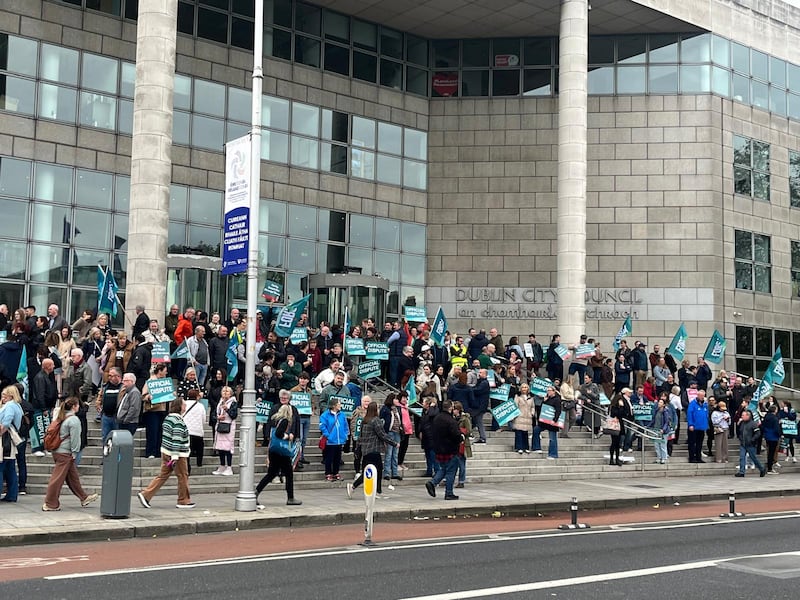
About 200 Dublin City Council workers gathered on the steps of the Civic offices, reports Dublin Editor Olivia Kelly.
âI think we need to be heard at that stage. We provide such a vital services for the public. We keep the city going and we deserve to have a pay rise going with inflation rates,â Audrey Lambert secretary of the Fórsa Dublin city branch said.
âWe have young people that come in and join us and they cannot stay because the pay is not enough. They canât get housing. They canât support themselves.
âWe have people, mothers, that are struggling to go to work, to pay childcare and itâs essential that we have a fair pay for everyone here.â
Richard Boyd Barrett joins Fórsa picket line in Dún Laoghaire

At the Fórsa picket outside the Irish Lights building at Dún Laoghaire harbour, civil engineering technician Colin Ball sounds slightly exasperated that the public service pay dispute has come to him and his colleagues picketing from early morning, reports Work Correspondent Emmet Malone.
Workers from admin, procurement, facilities management and diverse array of other roles stand close by and nod in agreement as he suggests âthey [the Government] have had a long time to sort thisâ.
âTheyâve have months but they havenât really done anything so weâre just standing here, supporting each other, trying to get a better deal,â he says as drivers of buses and cars beep their horns in support of the strikers while passing by.
Asked about the suggestion by James Lawless earlier on Wednesday morning that public servants tend to be better paid than their private sector counterparts, Ball seems surprised.
âI donât think thatâs fair to be honest. But the issue is that the agreement expired in June, and theyâve had plenty of time to sort a new one out. The rate of inflationâs gone up so much but our pay hasnât gone up. Thatâs why we are here.â
People Before Profit-Solidarity TD Richard Boyd Barrett joined the Fórsa picket outside the Irish Lights building in Dún Laoghaire and said he hopes there will be talks to end the public sector pay dispute over the coming days as he visited various pickets in his constituency on Wednesday morning.
âI think the Government has been playing a game of chicken with the unions but what they are seeing this morning is an enormous show of strength and I hope that leads to talks now,â he said.
âPeople are telling me they donât want to be out on strike but they say they will do it again if they have to and itâs very obvious as you travel around just how strong public support is for the action,â he continued.
âThereâs a lot of anger with Jack Chambers, that it has come to this.
âPeople of all ages, but a lot of young people have been talking about how they are struggling with cost of living issues, things like the cost of accommodation.
âItâs all very inspiring, Iâm hearing a lot of people have been joining unions in the last few weeks and itâs inspiring to see how many people are out this morning, how high their morale seems to be.
âHopefully other people will be inspired too because itâs not just public sector workers who are struggling with the cost of living crisis.â
âThe work isnât the problem, itâs the pay, we want fair payâ

Martina Burke, a healthcare assistant at one of the countryâs busiest emergency departments at University Hospital Galway, has a 40-kilometre commute to work in Galway City from her home in Kilmaine, Co Mayo, reports Dara Bradley.
A mother of adult children, like hundreds of workers on the picket line at UHG, sheâs feeling the pinch of higher fuel prices and the cost-of-living crisis.
âI work three long days. Iâm up in the morning at half five; not home âtil quarter past nine. Itâs a long day. Itâs busy in the ED. Itâs hard work. But the work isnât the problem, itâs the pay. We want fair pay,â she says.
A rep with trade union Siptu for 20 years, this is Burkeâs second strike and she feels the public is backing the industrial action.
âPeople who filter through the hospital see the hard work we do. The public are very supportive of us,â says Burke, who adds that workers agreed cover in the wards and ED to âmake it safeâ for patients during the strike.
âOur message to the Government is sit down, talk and listen to the unions. We donât want to be here today, no one does. We had a 95 per cent vote to strike, which was overwhelming â it means everyone wants the same thing.
âIf they donât sit down with us, we will 100 per cent be back here again next week,â says Burke.
Irish Dental Association strike for first time since 1922

Fintan Hourihan, chief executive of the Irish Dental Association (IDA), said the protest was about more than just pay but also about supporting the service to meet the needs of its special care patients as a group of public dentists picket outside the Roselawn health centre in Blanchardstown, Dublin.
Wednesday marked the first ever strike action by members of the IDA since it was founded in 1922, reports Health Correspondent Shauna Bowers.
âWhatever youâre earning doesnât feel like enough these daysâ
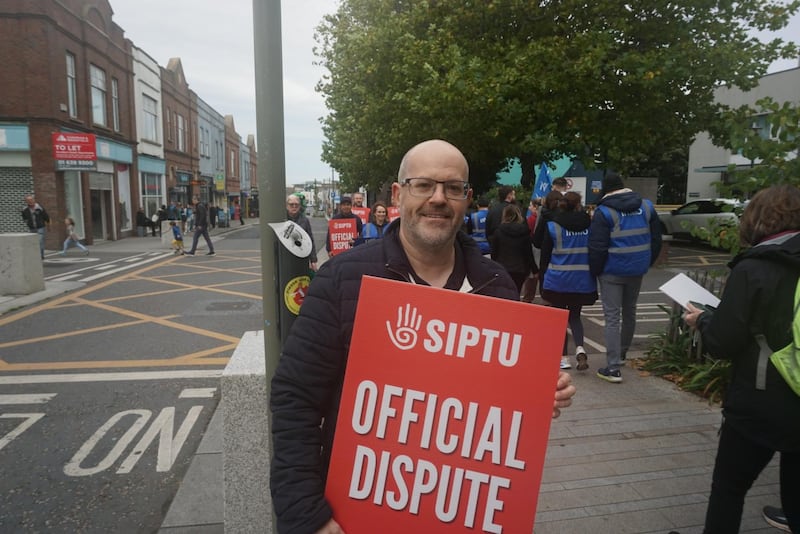
Conor Carroll, a porter at St Michaelâs Hospital in Dún Laoghaire, says Wednesdayâs strike is all about wages and the increased cost of getting by, reports Work Correspondent Emmet Malone.
âWeâre just out looking for fair play,â he says, as he pickets alongside colleagues from Fórsa, the Medical Laboratory Scientists Association and the Irish Nurses and Midwives Organisation at the hospital gates on the townâs main street this morning.
âItâs just about the cost of living. Every time you go to the supermarket you feel it,â he says, gesturing towards the Tesco shopping centre across the road.
âEverythingâs gone up, even the cost of eating, and whatever youâre earning doesnât feel like enough these days.
The hospital, he says, is a good place work, a community operation where âeveryone gets onâ. And it has good to him since he switched from bar work eight years ago to be around more for his then young children.
âManagement are good, they are always helpful with rosters when you need it,â he says, explaining that he commutes from Lucan and tries to work shifts that allow him do a school run.
âI have no complaints, really, except that my pay hasnât gone up,â he says, âand everything else has.â
âEveryone is feelingâ the impact of inflation

Jason Dee, a visitor service officer at Dublin Castle, described the strike as âvery necessary,â reports Ãrla Ryan.
âThere should be a natural transition from when a pay deal expires into the next deal,â he said, referring to the fact the Public Service Agreement 2024â2026 expired in June and a new deal has not yet been reached.
Dee said âeveryone is feelingâ the impact of inflation, especially lower paid workers.
He said the strike is âan inconvenience to people and to tourists and to everybody, so I think itâs in everyoneâs interest that itâs resolvedâ.
Strikers in Dún Laoghaire hope second day of action will not be necessary
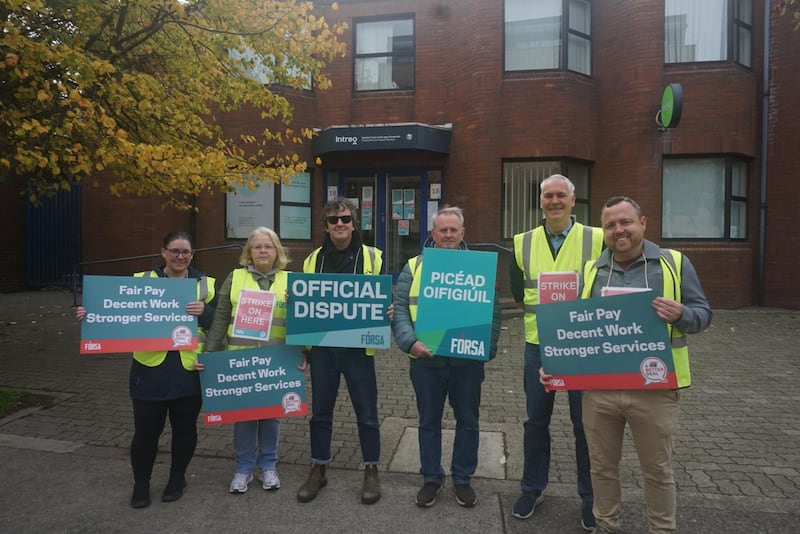
At Dún Laoghaireâs Intreo Office on Cumberland Street, staff who are used to dealing with other peopleâs employment issues were outside having to explain to the occasional service user that they are having some of their own, reports Emmet Malone.
âWeâve had a few people along this morning, and when theyâve seen us and theyâve asked a couple of questions about why we are striking,â said Lyndsay McGlynn, the centres manager, as she stands with a handful of her co-workers. âBut weâve had no negative feedback. Itâs been very understanding and supportive.â
She said she wants to see talks between the unions and hopes the industrial action can be sorted out before the second scheduled one-day stoppage next Wednesday.
Asked if it should have been sorted out before today, with Minister for Public Expenditure Jack Chambers having effectively said last night pay could be dealt with up front, she says the comments came too late.
âItâs something that came out the day before the strike, the night before it, I think it should have happened a lot earlier.
âI do hope that in the next little while it will get resolved. Hopefully, we donât have to do another strike date next Wednesday.
âBut people are very united, all of us here and across all the grades, you saw over 90 per cent voting for the strike everywhere.
âMissing two daysâ wages would be a big commitment for all of us but we are doing it because the wages need to be increased, particularly for those on the lower pay.
âWe are very united and I do think if it continues people will be determined enough to see it through.â
Workers âhavenât had a decent pay rise in foreverâ

Lisa Walsh McAuley, a visitor and security officer at the National Museum, said workers âhavenât had a decent pay rise in foreverâ, reports Ãrla Ryan.
âI donât see anything in my pay packet. I really donât because they give with one hand and they take with the other.â
Walsh McAuley said she deals with thousands of people every week in her role and, like many workers in the public sector, has been âdouble jobbingâ â ie, doing extra work that does not fall under her role.
âIt seems as if this Government wants to push us as far as we can possibly go. We have role creep in our jobs. Some of us are double jobbing, and thatâs taking a toll.â
She called on Jack Chambers and other members of the Government to help workers who have been badly impacted by the cost of living.
âJack seems to be the kind of person â and I can understand where heâs coming from because of his position â that he has to guard the money. But we have a pot there already. How big does he want this pot to be? It has to be spent somewhere … Either start giving something back or just watch out for the next election because I ainât happy.â
Walsh McAuley said she hopes the issue is resolved soon, but âweâll be here next week, if needs beâ.
Government âshould have engaged with workers earlierâ
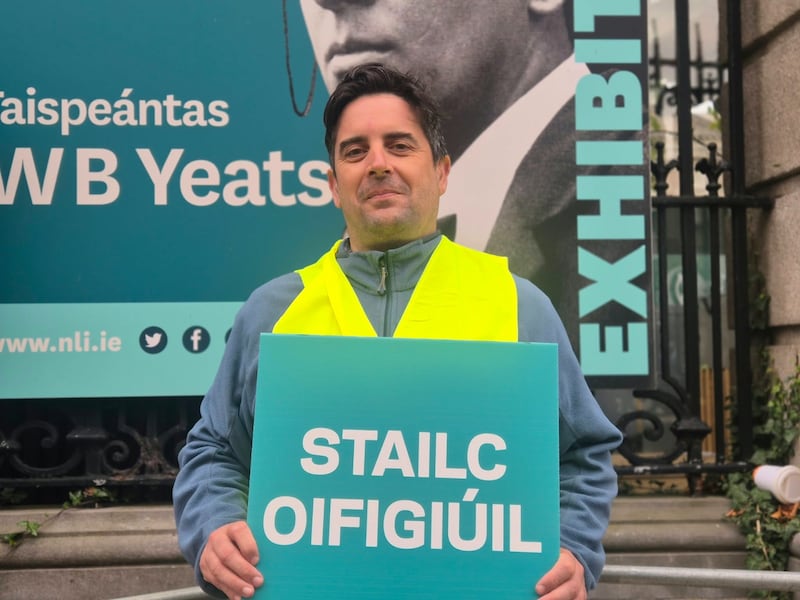
Workers from some of Dublinâs best-known cultural institutions and tourist attractions have called on the Government to engage with trade unions to avoid further strike action, reports Ãrla Ryan.
Brian Rice, digitisation programme manager at the National Library, said comments by Minister for Public Expenditure Jack Chambers â who on Tuesday night told RTÃâs Prime Time that pay can âabsolutelyâ be the starting point for negotiations â came too little, too late.
âThe Government had the opportunity to engage earlier; they didnât take it, and now weâre out because of that,â Rice said.
âThey should have engaged with workers earlier on this, and I think itâs time to sit down now and itâs time to listen to what workers have to say rather than just arrive at a fait accompli, and to come to some agreement that both parties are happy with.â
Rice said workers are struggling with the cost of inflation and âpay really needs to catch up with where prices have goneâ.
âThereâs lots of levels of pay in the Library, and I think weâd like to see the lower paid helped more, so theyâre proportionally lifted up higher because it is much tougher for them.â
Murphy expects to be back on picket line next Wednesday
Fine Gael TD Barry Ward has warned: âIf people are not sitting down around the table, this wonât be resolved,â reports Vivienne Clarke.
There had been âa concerted attemptâ by Government in recent weeks to get people around the table to talk about it, he told RTÃ Radioâs Today with David McCullagh show.
âThat hasnât happened because of preconditions that have been laid down. And I donât really think you can approach a negotiation by saying to people, well, weâve got to agree this before we even talk.
âIf people are not sitting down around the table, this wonât be resolved. And whatever about honest brokers or whether somebody mediates the discussion or somebody else is brought in to do that, that doesnât matter. If people are not willing to sit around the table, it wonât be resolved. And whatâs really important for ordinary people all over this country is that it is resolved and they get their services back,â he said.
However, People Before Profit TD Paul Murphy told the same programme that he expected to be back on the picket line again next Wednesday.
âWhat weâre hearing so far from the Government is not a commitment to seriously engage on pay. And therefore the workers are left with no choice. And when you talk to workers, theyâre clear. Look, I donât want to be on a picket line, but they voted overwhelmingly to take strike action. Theyâre doing so because theyâre in a desperate situation.
âBecause they see their income being eroded year after year. Where from 2021 to now, the total increases theyâve had in pay is just under 16 per cent. And the inflation rate over that period is about 22 per cent.
âSo theyâre struggling. And I would say, the beeps from people coming by all the picket lines Iâve been on this morning are incredible. The level of public support for this strike should make the government think again.â
Bags of rubbish left outside the closed Grangegorman recycling centre in Dublin 7 as workers at the centre are on strike.

Hundreds of striking health workers at University Hospital Galway

Fórsa members John Fitzgerald and psychotherapist Evelyn Newell holding her dog Alfie were among the hundreds of striking health workers on the picket lines at University Hospital Galway this morning, reports Dara Bradley.
Crowds gather outside the Mater hospital in protest over pay

Doctors, nurses, medical laboratory scientists, physiotherapists and other healthcare staff have gathered outside the Mater hospital in Dublin in protest over pay, reports Health Correspondent Shauna Bowers.
The large crowd of healthcare workers is greeted by horns of support by passing cars, trucks and bin lorries as they call for a better pay deal.
âWhat do we want? Fair pay. When do we want it? Now,â the protesters chanted.
The gathering comes ahead of the four officers of the public services committee of the Irish Congress of Trade Unions uniting outside the healthcare facility to outline their demands to Government.
Kevin Callinan from Fórsa, Phil Nà Sheaghdha from the Irish Nurses and Midwives Organisation (INMO), Adrian Kane from Siptu and John Boyle from the Irish National Teachersâ Organisation (INTO) are in attendance.
Small Fórsa picket set up in Brussels

Strike action is taking place abroad as well, writes Europe Correspondent Jack Power
A small Fórsa picket is set up outside the Republicâs largest diplomatic mission overseas, the Permanent Representation of Ireland to the EU.
About 300 diplomats, civil servants and officials are working in the Brussels office, which has greatly expanded to shoulder the extra workload during Irelandâs six month EU presidency.
Civil servants and temporary staff working in Brussels were unsure to what extent they were covered by the industrial strike action, with conflicting advice and guidance coming from Dublin.
The picket nearly didnât happen, but for a different reason.
The local council, or commune, of the Belgian capital that hosts the EUâs institutions and embassies, requires 10 daysâ notice for a protest or public demonstration.
Fórsa got in the paperwork a week ago and the local Belgian administration isnât known for its flexibility, but they showed a bit of leeway on this occasion.
Two passersby shouted encouragement for the strike as they walked by, and they didnât even sound French.
Primary teacher on picket line âliving pay cheque to pay chequeâ

Stephanie Goggins, a primary school teacher at Pelletstown Educate Together primary school in Ashtown, Dublin 15 said, she is âliving pay cheque to pay chequeâ, reports Education Correspondent Niamh Towey.
âIâm earning the most money Iâve ever earned in my career, and Iâm still struggling,â Goggins says.
Goggins, who was among dozens of protesters in Ashtown this morning, says there is âa strong feeling among the staff that we want to fight for this and we deserve a fair wageâ.
She feels teachers need a pay increase that is âin line with the cost of living, that we can live comfortably on. You know, many of us are well-educated people. Weâre dedicated to our work, and we deserve a wage that reflects that.â
Fórsa calls for appointment of independent mediator
Kevin Callinan, the general secretary of Fórsa and chair of Ictuâs Public Services Committee, has called for the appointment of an independent mediator in the public sector pay dispute, reports Vivienne Clarke.
The Taoiseach needs to take the initiative to try to break the impasse and the appointment of an independent mediator would be a way to do that, he told RTÃ Radioâs Morning Ireland.
It was âdisrespectfulâ to suggest that more than 300,000 people had gone on strike âas a first resort rather than as a last resortâ, he said.
âNobody wants to be on strike, there is a way that we can resolve this but we need a shift in the Government position. Iâve made clear this morning, I think that there is a way in which that can be done.
âI think the Taoiseach needs to take an initiative to try and break the impasse and Iâve suggested how that might be done. If there was an honest broker perhaps assisted by a representative from the employer side and a representative from the union side, it has worked before and I think itâs worth trying.â
Siptu calls for âsenior political interventionâ
Adrian Kane, Siptu deputy general secretary, has called for âsenior political interventionâ in the public sector strike, reports Vivienne Clarke.
There had been âa rupture in the social contractâ between the Government and public sector workers, he told Newstalk Breakfast with Anton Savage.
It would be helpful if the Taoiseach intervened, he responded when asked if Micheál Martin should get involved.
âOnusâ on unions to take next step to ensure âdeal is doneâ

The onus was now on the unions to take the next step to ensure âa deal is doneâ, said the Minister for Higher Education James Lawless, reports Vivienne Clarke.
The Taoiseach had invited the unions to discuss social partnership, but the unions had âeffectively said no thanks, or not right nowâ.
âI think thatâs regrettable, because I think if we did get around the table more often, weâd be in a better place to make progress on these kind of issues,â he told RTÃ Radioâs Morning Ireland.
âAnd again, my heart goes out to the workers on the ballot today, the parents who had to take children out of school, the hospital appointments being cancelled, the driving test and all the disruption.
âI respect the process, absolutely, but letâs try and not have this again next week and on into the future. The Taoiseach was open to discussion, he had made that position very clear.
âHe said pay is always the central issue. He said letâs get on with it. Heâs open for discussion.
âNo deal was ever done by one side staying outside the room. I think the onus really is on the union now to take the next step.â
Mixed views on public sector unions strike
In letters to the editor, Irish Times readers had mixed opinions on Wednesdayâs strike by public sector unions:
Sir, â The public servants taking industrial action are not available for work and consequently have to forego a dayâs pay. However, many TDs, who have a salary of just under â¬120,000, have indicated over the past week that they would not pass the picket at Leinster House and therefore make themselves unavailable for work, writes David Gordan.
Sir, â I believe the public sector unions are making a major strategic error in their approach to the negotiations with Government on the new pay deal, writes Paul Kilcullen.
In an employment environment increasingly dominated by artificial intelligence (AI), the tactics adopted against Government and the public are ill-advised. The next agreement will be dominated by AI productivity and job losses. The public sector, particularly the Civil Service, is full of opportunities for its use.
Read the full letters here.
Fórsa seeks appointment of âhonest brokerâ
Fórsa general secretary, Kevin Callinan, said Jack Chambersâs comments on the potential to discuss pay at the start of any negotiations is âpromisingâ but is not in itself enough to call off next Wednesdayâs second one-day strike, reports Work Correspondent Emmet Malone.
He told Morning Ireland he would like to see the Taoiseach seek to appoint âan honest brokerâ with experience of industrial relations to bring the two sides together.
âItâs worked before and I think it would be worth trying,â he said.
Callinan reiterated that one of the issues is the âbreakdown in trustâ relating to problems over the payment of âlocal bargainingâ aspects of the last pay deal and the Governmentâs failure to honour a commitment to repeal Financial Emergency Measures in Public Interests (Fempi) legislation. The legislation was introduced after the financial crash to prevent local deals being done in the public service and to tighten the Governmentâs control of its finances.
Siptu: largest mobilisation of members in a generation
Trade union Siptu said Wednesdayâs strike action was its largest mobilisation of its members in a generation.
âMore than 60,000 Siptu members will take part in the strike, manning up to 2,000 picket lines across the country alongside tens of thousands of other trade union colleagues in the public sector,â it said in a statement on Wednesday.
Picketing by Siptu members began at midnight at local authority facilities.
Emergency cover will operate under agreed local arrangements to protect life and public safety.
Siptu deputy general secretary, Adrian Kane, said: âThis mobilisation demonstrates the determination of our members to secure a better deal for workers struggling under a worsening cost-of-living crisis and a Government which is dismissive of their concerns.
âThe â¬1.2 billion announced in the budget for public sector pay claims is an offer of a pay increase of approximately 2.5 per cent in 2027 once pension costs and previous commitments are included.
âWith annual inflation currently running at 4.1 per cent this provides no credible starting point for talks aimed at protecting living standards,â he said.
Strike action with weather warnings in place
If youâre curious about todayâs weather, Met.ie might not be the most up-to-date place for information.
âDue to industrial action, there will be disruptions to updates on met.ie on Wednesday 14th October,â a post on Met Ãireannâs site reads today.
However, Met Ãireann previously published two yellow weather warnings for Wednesday.
A yellow wind warning is in place for counties Donegal, Galway and Mayo from 6am to 6pm on Wednesday.
A yellow rain warning is valid from 6pm on Wednesday to 6am on Thursday in counties Donegal, Galway, Leitrim, Mayo and Sligo.
Strikes should be âlast resortâ
Industrial action should be the last resort, Minister for Enterprise Peter Burke has said as he urged unions to enter talks with the Government. Vivienne Clarke reports.
âA strike should be the last resort. Thatâs the way the industrial relations architecture has worked because we all know here this morning that this issue will be resolved. All industrial strikes, in my memory, have always been resolved,â he told Newstalk Breakfast with Anton Savage.
âBut how they are resolved is by dialogue, by sitting around the negotiating table, trying to get strands of commonality and agreement and getting a sustainable agreement for, first of all, their members.
âAnd that has been the case, as I pointed out, that over the last pay agreement, weâve had pay increases of about 9.6 per cent cumulatively, which outpaced inflation of 6.6 per cent. So thatâs real wage growth for employees who are in the public service. And the Government wants to be a good employer.

âWe want to offer better pay, better conditions, but we also have to get better services for the public,â he said. âWeâve been very clear that we want to improve paying conditions for all members of the public and Civil Service right throughout our country. We want better conditions, but we also need a sustainable agreement for the taxpayer. And thatâs Governmentâs obligation.
âWe canât negotiate an agreement that ultimately will leave our country exposed or that wonât be sustainable. I think thatâs only responsible of any government to take that approach.â
Taoiseachâs feathers ruffled in Dáil
Micheál Martin had a tetchy exchange with a metaphor-chucking Mary Lou McDonald in the Dáil chamber on Tuesday.
She accused him of âplaying chickenâ with the public sector unions. Now, McDonald implied, the chicken games were coming home to roost.
Whatever about the chickens, he remained unflappable throughout. Only his innocence seemed injured. More than once, he spoke of the âenhanced social dialogueâ he had offered trade unions in vain.
Frank McNally details the exchange in his Dáil sketch here.

Unions urge Taoiseach to intervene to prevent more strikes
The Taoiseach should intervene to get a talks process started if further public sector strikes and disruption are to be prevented, Fórsa union leader Kevin Callinan has suggested.
As Emmet Malone and Pat Leahy report, he was speaking after the union side rebuffed late efforts by Minister for Public Expenditure Jack Chambers and the Government side to engage and prevent Wednesdayâs one-day strike.
Callinan was responding to a suggestion by Chambers that while the Government wanted talks to begin at the Workplace Relations Commission on Tuesday, he would consider other ways to achieve progress if that could not be done.
Asked about what might break the deadlock, Callinan, who also chairs the public services committee of the Irish Congress of Trade Unions, said it would take âan intervention. And I think that intervention has to come from … the Taoiseachâ.
The Government is likely to make a push to bring the unions into a talks process after the stoppage as it seeks to avoid further strikes scheduled for next week.
According to sources familiar with the Governmentâs position, renewed efforts to start negotiations in the coming days may include seeking an independent mediator or facilitator to bring the two sides together. Coalition sources stopped short of saying they would agree to the unionsâ demand to deal with pay first in the negotiations.
It is likely that informal approaches will be made with a view to repairing relations that have become strained in recent days.
Government appeals fall on deaf ears
The Taoiseach urged trade unions yesterday to engage in further dialogue ahead of the strike.
Micheál Martin expressed concern around the disruption that could be caused and said the â¬1.2 billion the Government set aside in the recent budget for a pay deal provided a strong foundation for talks.
âWe did appeal (on Monday) for the unions to come in for talks, and I would say in the recent budget, the Government made a number of efforts, and took a number of initiatives, that were important for workers â significant tax cuts, continued expansion of public service numbers and specific initiatives on reducing the cost of childcare,â the Taoiseach said.
âIn my view, there is a strong foundation there laid by the budget and other measures to facilitate productive negotiations on a new national pay agreement. We have negotiated previous pay agreements in good faith, there is no reason why anyone should doubt our bona fides in respect of negotiating a new package.
âMy real concern is the disruption that will be caused to many people, particularly patients who were expecting operations and procedures and indeed in terms of school days being lost.â
Minister for Public Expenditure Jack Chambers had called on the unions to postpone the strike and instead enter talks at the Workplace Relations Commission.
However, the Irish Congress of Trade Unionsâ Public Service Committee said there was âno basisâ for the strike to be postponed.
Whatâs closed? What services are affected?
Ãrla Ryan has a comprehensive piece detailing the background to the strike action and the impact it will have on public life today.
Here is what you need to know about the strike and its expected impact.
Now begins a winter of discontent?
Good morning. Hundreds of thousands of public sector staff go on strike today on what could potentially be the first day of a long winter of discontent.
About 300,000 public sector workers, including nurses, doctors, teachers and civil servants, will engage in the national strike following earlier work-to-rule action.
Schools, colleges, universities, libraries, council offices and many parks are among the publicly run facilities that are closed because of the action, which involves some 300,000 workers.
Health services are severely disrupted, with all elective procedures and thousands of appointments postponed. The HSE has warned of âsignificant and widespreadâ disruptionâ to its services.
Members of Fórsa, Irelandâs largest public sector union, as well as Siptu had voted in favour of industrial action including strike.
The major teachersâ unions as well as collective bodies for nurses, midwives and doctors also voted in favour of action.